When you submit a planning application in the UK, the local council wants more than just drawings and floor plans. They want proof that your development will meet energy and carbon targets.
That proof comes in the form of an Energy Statement. Most developers know they need one. Fewer stop to think about what separates a professionally prepared report from one that barely scrapes by.
The difference shows up at exactly the wrong moment if you get it wrong.
Let’s explore the seven benefits of professional energy statement services.
1.Smooth Planning Submissions
Planning officers review a lot of applications. A clear, structured energy statement that meets local policy requirements simplifies their job. As a result, when their job is easier, your application moves faster.
Vague or incomplete reports often delay the timeline with requests for more information. Getting it right the first time can save weeks, sometimes more.
2.Policy Compliance from the Start
National building regulations set the baseline, but most councils add their own sustainability targets on top. Some require higher levels of carbon reduction.
In addition, some councils have specific preferences around renewable technologies or district heating. A professional energy consultant ensures your energy statement meets council standards.
3.Accurate Energy Demand Assessments
An Energy Statement is not a written summary of good intentions. It is a technical document built on real numbers. A professionally prepared report includes:
What a Professional Assessment Includes
- A full energy demand assessment based on your building’s actual design.
- Heating, cooling, lighting and ventilation figures relevant to the project type.
- Projected CO2 emissions calculated using approved methods.
- A clear comparison against the council’s required reduction target.
When the numbers are done properly, there is very little for a planning officer to challenge.
4.Right Guidance on the Energy-Efficient Assessments
Some reports list standard efficiency measures without thinking about whether they suit the building. However, a professional takes a different approach.
They look at your design, your site, and your build type, then suggest measures that genuinely fit. That might be enhanced wall insulation, better glazing, or mechanical ventilation with heat recovery.
The recommendations are specific to your project, not lifted from a template.
5.Renewable Technology Options That Actually Fit Your Project
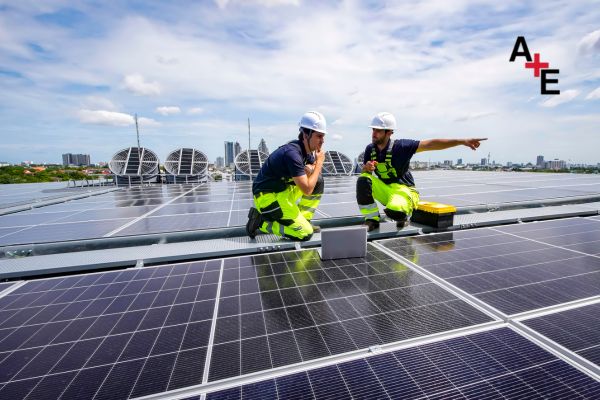
Renewable technologies are an integral part of energy statements, but they do not all suit every project. Solar PV works well on some buildings and poorly on others, depending on roof orientation and available area.
Heat pumps need the right conditions to perform as expected. Furthermore, a good consultant does not just list options. They look at what is realistic for your site and recommend systems that will deliver the right output and meet council requirements.
That kind of honest assessment stops you from committing to something that looks good on paper but causes problems later.
6.A Carbon Reduction Strategy That Is Easy to Follow
Each council sets a CO2 reduction target, typically as a percentage above the Building Regulations baseline.
Your energy statement has to show the total emissions figure, prove the reduction achieved, and explain how it has been done.
Clear writing and solid calculations provide the planning officer with everything needed to decide. There is no back and forth, no requests for more information, and no unnecessary hold-ups.
7.Less Risk of Costly Redesigns
Problems caught at the report stage cost far less than problems caught after planning has been submitted.
An energy consultant reviews your design for compliance issues in the Energy Statement. This kind of early input can prevent a redesign that would otherwise set the project back by months.
Therefore, the cost of getting professional help upfront is always lower than the cost of fixing things later.
Working With A+E Consultancy Ltd
A+E Consultancy Ltd is a UK-based energy compliance consultancy that works with architects, developers, and builders on planning and building regulations compliance.
They prepare energy statements for residential and commercial projects of all sizes, managing everything from energy modeling through to the finished report.
Their services also cover:
- SAP and SBEM calculations
- Overheating assessments
- Sustainability Statements
- Thermal bridging (Ψ) Calculations
- Daylight and Sunlight assessments
- Water efficiency calculations
- On-Construction Energy Performance Certificates
The team looks at each project individually rather than applying a one-size-fits-all approach, which is why their reports tend to hold up well under planning scrutiny.
Conclusion
A well-prepared energy statement does a lot more than keep the council happy. It reduces the risk of delays, supports better design decisions, and gives your planning application a much stronger foundation.
If your project also falls under Part O of the Building Regulations, A+E Consultancy Ltd offers overheating assessments as part of their compliance services, making it simple to manage all your Building Regulations compliance needs without going to multiple consultants.
FAQs (Frequently Asked Questions)
What is an energy statement?
An energy statement (energy strategy) is a technical planning document required for new builds or major renovations in the UK. It shows how the development meets local authority energy efficiency and carbon reduction targets.
What are the benefits of energy conservation measures?
Energy conservation provides substantial financial savings, environmental protections, and health improvements. These benefits include:
Key Benefits of Energy Conservation
- Access to Financial Rebates
- Lower utility bills
- Reduced environmental impact
- Preservation of natural resources
- Enhanced thermal comfort and productivity
- Lower carbon footprint
- Increased property value
- Healthier indoor environments
- Economic growth and job creation