If you are building a new home or working on a residential development, you may need to demonstrate that the proposed property meets the required water efficiency standard.
Water efficiency calculations estimate the amount of potable water a dwelling is expected to use per person each day. For new dwellings in England, the calculation forms part of demonstrating compliance with Part G of the Building Regulations.
Getting the calculation approved is usually straightforward when the correct information is provided early and suitable water-efficient fittings are specified.
This guide explains what is required, how the calculation works, and what you can do to avoid delays during the approval process.
What Are Water Efficiency Calculations?
A water efficiency calculation assesses the expected daily water consumption of a new dwelling based on its proposed fixtures, fittings and appliances.
The calculation considers items such as:
- Toilets and their flush volumes
- Bathroom and kitchen taps
- Showers
- Baths
- Washing machines
- Dishwashers
- Water softeners, where applicable
- Greywater systems
- Rainwater harvesting systems
The result is expressed in litres per person per day (L/person/day).
Unlike an estimate based on occupant behaviour, the calculation uses a standard methodology and product performance information to assess the dwelling consistently.
What Water Efficiency Standard Do I Need to Meet?
Under the current Building Regulations requirements in England, new dwellings generally need to achieve a calculated water consumption of no more than:
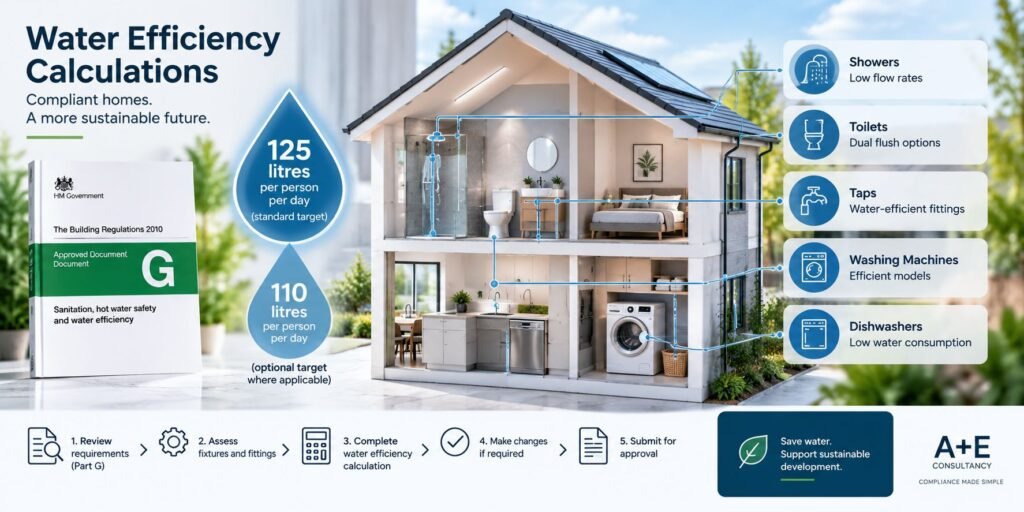
125 litres per person per day
However, an optional tighter standard of:
110 litres per person per day
may apply where it has been specified through the planning permission.
Because requirements can vary according to the project and planning conditions, it is important to confirm the applicable target before finalising your sanitaryware and other water-using fittings.
How Do I Get a Water Efficiency Calculation Approved?
The key to getting your water efficiency calculation accepted is making sure the assessment accurately reflects the proposed specification and demonstrates compliance with the applicable target.
The process will normally involve the following steps.
1. Confirm the Required Water Efficiency Target
Before carrying out the calculation, check the planning permission and Building Regulations requirements for the development.
You need to establish whether the project must achieve the standard 125 L/person/day target or the optional 110 L/person/day target.
Knowing this early helps avoid specifying products that later need to be changed.
2. Gather the Fixture and Fitting Information
The calculation relies on information about the water-consuming products proposed for the dwelling.
This can include:
- WC flush volumes
- Shower flow rates
- Tap flow rates
- Bath capacities
- Dishwasher consumption
- Washing machine consumption
- Water softener information
- Rainwater or greywater systems
Manufacturer specifications are particularly useful because the approved calculation methodology uses product consumption figures.
Providing accurate information at the beginning makes the assessment faster and reduces the risk of revisions later.
3. Complete the Water Efficiency Calculation
Once the specification is available, the dwelling’s expected water consumption can be calculated using the methodology set out for new dwellings.
The calculation combines the performance of the different fittings and appliances to determine the overall daily water consumption per person.
The result can then be compared with the required target.
For example, if your project is required to meet 125 L/person/day and the calculation produces a result below that figure, the proposed specification can demonstrate compliance with that water efficiency target.
4. Make Design Changes If the Calculation Fails
A failed initial calculation does not necessarily mean major changes to the development are required.
Often, relatively small specification changes can reduce the calculated water consumption.
Possible improvements include:
- Lower-flow shower heads
- Water-efficient taps
- Dual-flush toilets
- Smaller or more efficient bath specifications
- Water-efficient washing machines and dishwashers
- Greywater recycling
- Rainwater harvesting
The most appropriate solution will depend on how far the project is above its target and the wider design requirements.
Running the calculation before products are ordered gives the design team more flexibility to make cost-effective changes.
5. Prepare the Final Compliance Documentation
Once the design achieves the required water efficiency target, the final calculation can be prepared for the project records and Building Regulations compliance process.
For projects to which Regulation 36 applies, the person carrying out the work must provide the local authority with notice identifying the applicable water efficiency requirement and the calculated wholesome water consumption of the completed dwelling.
The information therefore needs to reflect what is actually installed, rather than products that were considered earlier but subsequently changed.
Why Do Water Efficiency Calculations Get Rejected or Delayed?
Problems usually arise when the calculation does not match the project specification or there is insufficient information to verify the proposed fittings.
Common issues include:
- Missing tap or shower flow rates
- Incorrect WC flush volumes
- Unconfirmed sanitaryware specifications
- Using different products on site from those included in the calculation
- Failing to account for the tighter planning requirement
- Submitting an incomplete calculation
- Leaving the assessment until too late in the construction process
These issues are easier to resolve when water efficiency is considered during the design and specification stages.
Should I Complete the Calculation Before Construction?
Ideally, yes.
Completing an initial water efficiency assessment during the design stage can identify potential compliance problems before sanitaryware and appliances are purchased.
For architects and developers, this can help avoid late specification changes, additional costs and unnecessary delays.
A final check can then be completed when the products to be installed have been confirmed.
What Information Do I Need to Provide?
To prepare a water efficiency calculation, you should ideally have a schedule or specification showing the proposed sanitaryware and water-consuming fittings.
Useful information includes product names or model numbers together with their relevant capacities, flow rates or consumption figures.
If every product has not yet been selected, an initial calculation can still help establish the performance specifications that the final products will need to achieve.
Who Can Prepare Water Efficiency Calculations?
A water efficiency consultant can review the project information, carry out the calculation and identify suitable improvements where the initial specification does not achieve the required target.
At A+E Consultancy, we provide Water Efficiency Calculations for residential developments, helping architects, developers and homeowners demonstrate compliance with Part G requirements.
Our approach is focused on making compliance simple. We review the proposed fittings, calculate expected water consumption and recommend practical specification changes where improvements are required.
How Can I Make the Approval Process Easier?
The best approach is to consider water efficiency early.
Confirm your required target, choose suitable water-efficient fittings and make sure the products installed on site match those used in the final calculation.
For projects with a tighter planning requirement, early assessment is particularly valuable because the specification may need to achieve the 110 L/person/day optional target rather than the standard 125 L/person/day requirement.
A clear calculation supported by accurate product information gives Building Control the information needed to assess compliance and helps reduce avoidable queries.
Need Water Efficiency Calculations for Your Project?
If you need Water Efficiency Calculations in the UK, A+E Consultancy can help you assess your proposed specification and demonstrate compliance with the applicable Part G water efficiency requirements.
Whether you are an architect, developer or homeowner, we can review your project information, complete the required calculations and recommend practical changes where necessary.
Contact A+E Consultancy today to discuss your project and get a quote for Water Efficiency Calculations.